Business Waste Removal in Barking
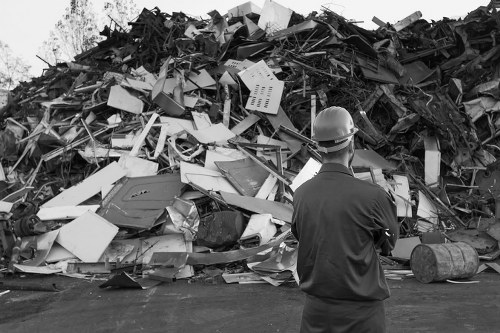
Business waste removal in Barking needs to be organised, practical and suited to the type of premises involved. We collect and clear commercial waste with a focus on day-to-day business needs, from regular office rubbish and mixed office furniture to bulkier items that are awkward to move through shared entrances or busy loading areas. The service is designed for companies that want waste taken away without turning the process into a disruption, so the emphasis is on clear scope, sensible timing and dependable handling of the materials involved.
Our work covers a broad range of non-hazardous commercial clearances, including items from offices, shops, workshops and other workplace settings. Where a business is replacing furniture, emptying storage rooms or dealing with accumulated waste, we can help remove the unwanted items in one organised visit. If you are comparing options, start with the business waste removal service page for the core details, and use the information here to judge whether the type of clearance matches your site, waste stream and access needs.
The best business waste removal is rarely just about lifting items and leaving. It also depends on what is being cleared, how much sorting is sensible beforehand and whether particular objects need separate handling. Good planning saves time, especially where waste is spread across multiple rooms or stored in cupboards, basements or back areas. If your premises generate repeated waste from changes, refits or clear-downs, a structured collection can be a straightforward way to keep the site manageable.
Commercial clearance for offices and shared workplaces
Office and workplace waste often includes a mixture of paper waste, packaging, redundant desks, broken chairs, screens, cabinets and miscellaneous items from storage. Clearing this kind of material needs a careful approach because business premises can have narrow access routes, lifts, reception areas and other occupants to work around. Our service is set up to remove office waste without forcing the site into a prolonged shutdown, and it can be adapted for both small offices and larger commercial floors.
When a workspace is being reconfigured, it is usually helpful to separate what remains in use from what is destined for removal. A clear list or a few photographs can make it easier to identify the volume and nature of the waste, which in turn helps with planning. You do not need to over-prepare, but it is useful to know which items are staying, which are leaving and whether any fragile equipment needs to be set aside before collection.
What office clearances commonly include
Office clearances can involve one room, an entire suite or several floors where furniture and old equipment have built up over time. Typical items include workstations, filing cabinets, pedestal drawers, shelving, office chairs, meeting tables, reception furnishings and packaging from deliveries or moves. We also handle general business waste that has become difficult to manage through normal bin capacity, provided it falls within the agreed non-hazardous scope.
Furniture removal and disposal for business premises
Commercial furniture is often heavier, bulkier and more awkward than household items, especially when it has been fitted into place or assembled on site. Removing it safely from a business property can require a planned route, sensible handling and a decision about whether items can be taken apart before collection. Furniture removal is especially useful when an office, shop or other workplace is being refreshed and the old fittings need to go before new ones arrive.
Our furniture clearance service covers the removal of unwanted items from business settings, while the furniture disposal page gives more detail about the disposal side of the process. This helps when you have mixed office furniture rather than a single item type. In many cases, the most efficient approach is to group items by room or by category so that the clearance can be completed in a tidy sequence rather than as a series of isolated lifts.
Useful preparation for furniture removal usually means clearing access, separating fixtures from loose items and identifying anything that must stay on site. If desks or cabinets contain paperwork, equipment or small personal items, those should be removed first. This keeps the process safer and helps avoid confusion when several people use the same workspace. A concise inventory is often enough for us to understand the job properly.
Clearances for garages, storage rooms and business overflow
Many businesses use back rooms, garages, outbuildings or shared storage areas to hold old stock, packaging, spare furniture and general overflow. Over time these spaces can become difficult to navigate, particularly when items have been left from previous moves or fit-outs. A targeted clearance can restore the area to working use, and it is often the simplest option when the contents are mixed and no longer worth keeping.
Our garage clearance page covers one common type of storage space, while the home clearance and house clearance pages may be useful if your business occupies a mixed-use building with domestic-style rooms to empty. For commercial clients, the main issue is usually not the label on the room but the practical question of what is inside it, whether access is straightforward and which items are to be removed in a single visit.
Storage clearances can uncover items that have been kept for years because they were once useful or might have been needed later. Sorting through that kind of material is not always quick, so it helps to decide in advance what should be kept for records, what should be stored elsewhere and what can be taken away. That simple decision-making step often makes the physical clearance far smoother.
Waste removal for business refurbishments and fit-outs
Refurbishment work creates a different sort of waste from routine office rubbish. There may be offcuts, redundant fittings, packaging, old carpets, broken fixtures and leftover contents that no longer belong in the finished space. Business waste removal is useful at this stage because the clearance can be matched to the pace of the project, helping the area stay usable while changes are being made. It is a practical way to keep rooms from being overwhelmed by discarded materials.
For sites undergoing structural or decorative work, the builders waste clearance page is a helpful reference because it reflects the kind of mixed debris that can follow fit-outs and redecoration. If your project also includes shelving, desks or customer-facing furniture that is no longer needed, those items may be combined with the general clearance where appropriate. The aim is to remove what is redundant without creating extra handling for the team on site.
At this stage, the main decisions are usually about timing and segregation. Some materials are easier to remove once they have been gathered together, while others should remain in place until a contractor or manager has confirmed they are surplus. If the site has different teams working at once, it can help to mark waste areas clearly so that disposal does not interfere with equipment, stock or ongoing tasks.
Specialist handling for appliances and other bulky items
Some business clearances include bulky equipment that cannot simply be stacked with regular waste. Fridges, freezers, small appliances, canteen items and similar objects may need to be separated because of their size and construction. A business that is updating a staff kitchen, closing a site or replacing back-of-house equipment will often need a clearance that treats these items as a distinct part of the job rather than leaving them to be moved piecemeal.
The fridge and appliance removal page is the right place to look when unwanted appliances are part of the load, while mattress and sofa disposal can be useful for premises with sleeping accommodation, waiting areas or furnished spaces that are being emptied. These services sit alongside general business waste removal when the site contains mixed items and there is a need to separate heavier pieces from ordinary rubbish.
Bulky items often create the biggest challenge at the point of removal rather than the point of collection. Door widths, stair access, lift use and route planning all matter. Where practical, it helps to know whether items are still plugged in, fixed in place or stored behind other materials. One clear route from the storage point to the exit can make a considerable difference to how neatly the clearance proceeds.
Reducing waste through sorting, recycling and sensible disposal
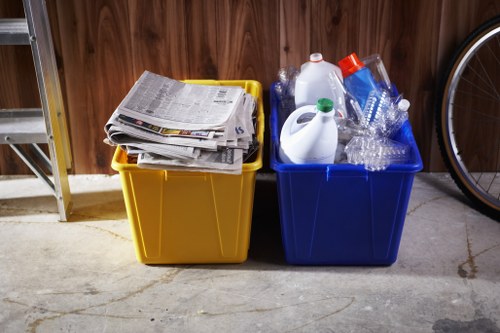
Commercial waste removal is not only about getting rid of unwanted material; it is also about handling it in a sensible way once it leaves the premises. Different waste types may need to be separated so that the clearance is orderly and so that reusable or recyclable items are not mixed unnecessarily with ordinary rubbish. For businesses that care about tidiness and responsible disposal, the process starts with a sensible assessment of what can be separated before collection.
The recycling and sustainability page gives a useful overview of the approach to materials that can be diverted from general disposal where appropriate. This can be especially relevant when an office is clearing metal frames, cardboard, shelving, plastics or other predictable waste streams. Sorting is easier when waste has been grouped into simple categories, and that can reduce the amount of time spent untangling mixed contents on site.
Not every item can or should be treated in the same way, and some materials are best handled separately from the outset. That is why it is worth identifying what is ordinary commercial waste, what is bulky but straightforward, and what needs special attention. A bit of early order makes the disposal stage more predictable and gives managers a clearer understanding of what is being removed.
What to think about before arranging a collection
Most business clients want a waste removal service that is easy to organise and easy to understand. The clearest enquiries usually state the type of premises, the approximate volume of waste and whether access includes stairs, lifts, loading bays or restricted entry points. If you can share a short description of the items and the area they occupy, that is usually enough to begin planning the job properly.
It also helps to decide whether the waste is a one-off accumulation or part of an ongoing pattern. A clear-down after a move, redecoration or equipment replacement is different from regular overflow in a storage room or back office. For this reason, it is sensible to group the items logically before the collection date, even if only on paper. A few notes about the rooms involved can make the process much easier to organise.
- Identify the main types of waste, such as furniture, packaging, paper waste or appliances.
- Check any access constraints, including restricted parking, lifts or shared corridors.
- Separate items that must stay on site from those ready for removal.
- Make sure any confidential paperwork or stored data is dealt with before the clearance.
Business premises, offices and mixed commercial sites
Business waste removal is used by many different kinds of premises, and the exact mix of items can vary widely. An office may need desks and storage removed, a retail unit may have packaging and display fittings, and a workshop may need old stock and broken equipment cleared. The common feature is that the waste has become part of the working environment and needs to be removed in a way that respects the layout and activity of the site.
Where a property contains more than one type of use, a single clearance can sometimes combine multiple waste streams. That may include office waste in one area, furniture in another and general items from storage rooms elsewhere. The job is usually easier when each area is treated in turn rather than all at once, because it keeps the process controlled and helps prevent useful items from being mixed with those that are definitely leaving.
In some premises, the key issue is not volume but awkwardness. A handful of large items can be more troublesome than a room full of smaller waste because they may not fit neatly through corridors or lifts. In those cases, the decision-making is less about counting bags and more about understanding the shape, weight and location of the items that need attention.
About Barking
Barking is an area in east London within the London Borough of Barking and Dagenham, lying on the northern bank of the River Thames and historically developing from a river settlement into a busy urban district. Its name is closely associated with Barking Abbey, a powerful medieval religious house founded in the 7th century and later dissolved in the 16th century, though little of the original complex survives above ground. The town centre today reflects many layers of change, with a mix of older streets, post-war redevelopment and more recent regeneration around the station and town centre. Barking station forms an important transport node, linking the area with the District and Hammersmith & City lines as well as c2c rail services, while the nearby A13 and river frontage connect it to wider east and south-east London. Eastbury Manor House, a nationally significant Elizabethan building, stands as one of the area’s best-known historic properties and offers a contrast with the later housing and commercial development around it. Parks and open spaces such as Barking Park provide recreational space within the urban fabric, and the area’s waterways, canals and river edges contribute to its distinctive geography. The district has long been shaped by trade, settlement and transport, and that mixture of old and new is still visible in its streetscape, public buildings and residential estates.
Pricing factors and straightforward quotation requests
Quotation requests are usually more accurate when they describe the contents clearly rather than simply naming a room. The main cost factors are generally the type of waste, the amount to be removed, the access involved and whether any items need to be dismantled or separated. That means a brief, practical description is often better than a long explanation. If there are special circumstances, such as tight stairways or a large volume of furniture, those details should be included in the first enquiry.
Our pricing and quotes page is the best place to look if you want to understand how estimates are approached before you make contact. For some businesses, it is enough to note the rooms involved and the rough scale of the clearance; for others, it is helpful to list the main item types one by one. Either way, the aim is to produce a quotation that reflects the actual job rather than an approximate guess.
If you are ready to move ahead, request a quotation with a short description of the waste, the site type and the access conditions. A clear request is usually the quickest route to getting the right arrangement in place, and it helps everyone understand what is included from the outset.
Additional services and when they may be useful

Some clients need more than one kind of clearance, particularly when a property is being emptied in stages. A business may start with office waste removal, then need a loft, flat or house cleared as part of a wider relocation or property handover. In that situation, separate service pages can help you identify the most relevant option for each area, while the overall plan keeps the work orderly and realistic.
Useful supporting pages include loft clearance, flat clearance and waste removal for broader enquiries that do not fit neatly into one room type. For customers with particularly sensitive material, confidential shredding may also be relevant where paperwork or records need separate handling. The point is to choose the page that matches the waste stream, then keep the enquiry focused on what is actually present.
When you are ready, make a plain-language note of the items, the location and the best contact details for the site, then ask for a quotation. If the job looks straightforward, that can be all that is needed to get the process moving. For many businesses, the key is simply to turn clutter into a clear plan and have the waste collected without fuss.